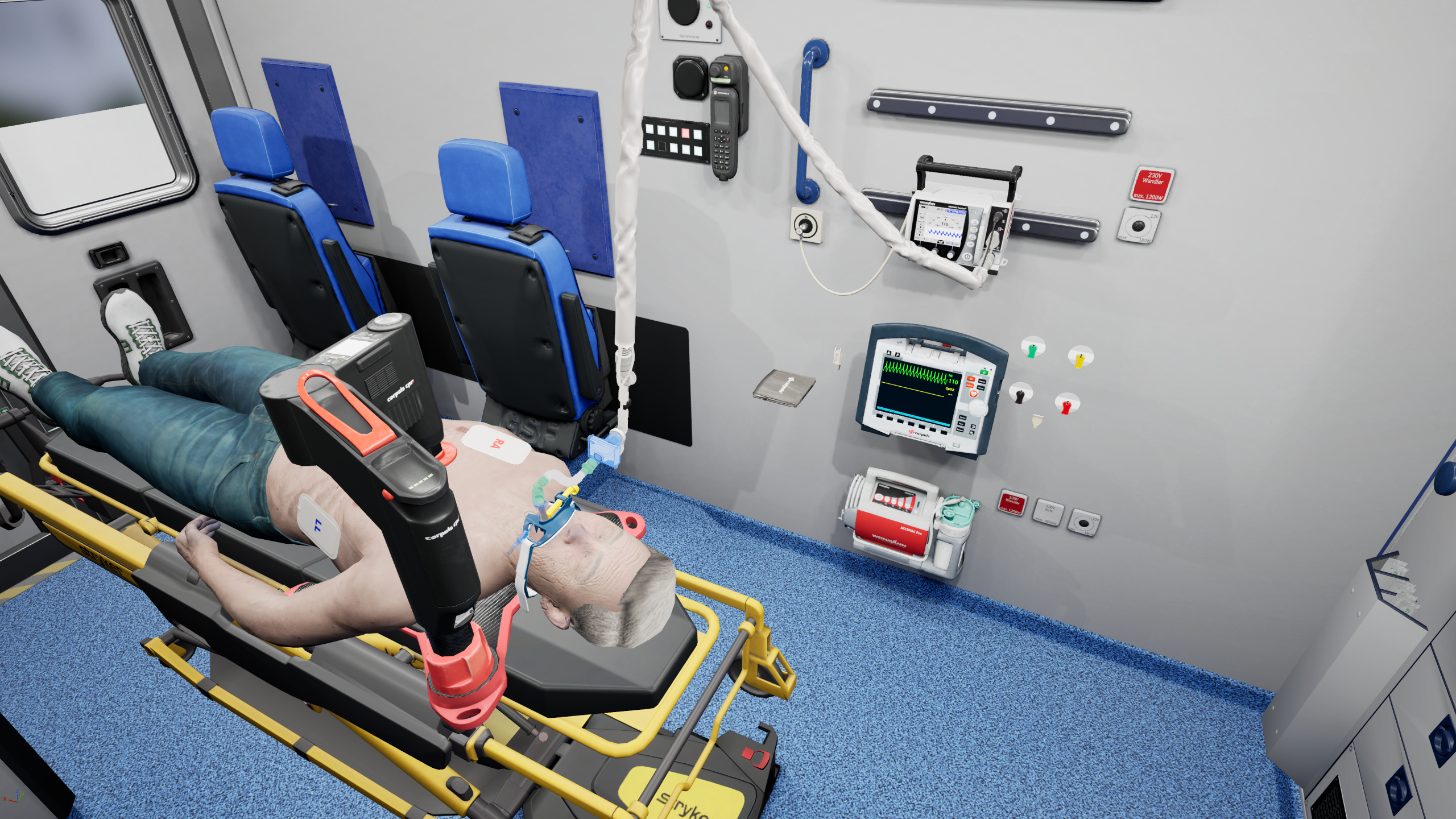
Immerzed is officially represented with VRescue as a featured application of the Pulse Physiology Engine. This makes us part of a large community of high-fidelity medical simulations that utilize Pulse technology. We are very proud to have accomplished this step, especially since it was a big technical hurdle after our transition from PCVR to standalone VR. However, we have found ways to successfully implement the integration with a standalone application – also because of the friendly and cooperative support of Pulse itself.
What Is Pulse Physiology Engine?
The Pulse Physiology Engine, developed by Kitware Inc., is a C++-based, open-source tool that simulates human physiology in medical education, research and training technologies. It enables accurate and consistent calculation of physiological responses to acute injuries, medical conditions and treatment interventions. The engine can be used standalone or in combination with simulators and models of varying accuracy. It is cross-platform and supports Windows, Mac, Android and Linux. The Pulse Physiology Engine is used in medical education, research and training and offers interfaces for various programming languages such as Java, C, C# and Python.
Why Do We Use Pulse?
Pulse is particularly important for emergency medical training simulations such as VRescue. A realistic presentation of examination and treatment options requires plausible, flexible and reliable data on the medical condition of patients. The Pulse Physiology Engine allows us to simulate precisely this condition in an uncomplicated way so that trainees are optimally prepared for real scenarios in virtual reality. We can therefore concentrate entirely on visually displaying the values calculated by Pulse and thus offer the highest possible degree of immersion and realism. The open source license ensures seamless and adaptable integration into our products.
In addition, Pulse is based on scientific data and work and is regularly referenced and verified by research, which is why the physiological data from the engine can be considered extremely reliable.
This Is How We Got Pulse Running on Android
Our journey with Pulse began last year, when VRescue was still planned as a PCVR application. Over time, however, it became clear that a standalone application was better suited to our own ideas and those of our partners. The problem: Pulse was initially simply not compatible with mobile VR devices. By fully implementing the source code as an Unreal plugin, making minor fixes and abandoning Dynamic Cast, Pulse was finally able to run on Android systems. In this extensive undertaking, we were strongly supported by Kitware from the very beginning.
We would therefore like to thank Kitware Inc. for the productive collaboration and look forward to the future of digital research and medicine.
Further Links
Website of Pulse Physiology Engine: Pulse Physiology Engine (kitware.com)
Scientific Publications about Pulse Physiology Engine: Pulse Physiology Engine – Publications